


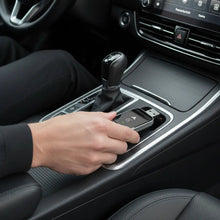
Wireless CarPlay is one of the most convenient upgrades you can make to your car — but is it actually safe to use while driving? It's a fair question, and one that comes up a lot. The short answer is: yes, wireless CarPlay is significantly safer than using your phone directly, and in most countries it's the legally preferred way to interact with your iPhone in the car.
Here's the full breakdown — including what the research says, how the law works in the US, UK, Canada, Australia, and Europe, and how to use CarPlay as safely as possible.
What Makes Wireless CarPlay Safer Than Using Your Phone
The core safety argument for CarPlay — wired or wireless — is that it keeps your eyes on the road and your hands on the wheel. Here's how:
- Siri handles the heavy lifting. You can make calls, send messages, get directions, and change music entirely by voice. No tapping, no scrolling, no looking away.
- Large, simplified interface. CarPlay displays a stripped-down version of your apps on your car's screen — bigger icons, fewer distractions, designed for glances rather than stares.
- No need to pick up your phone. With wireless CarPlay, your iPhone stays in your pocket or bag. You never need to touch it.
- Do Not Disturb While Driving. iOS automatically activates this mode when CarPlay is connected, suppressing non-essential notifications so you're not tempted to check your phone.
Compared to holding your phone, texting, or even using a phone mounted on your dashboard without CarPlay, wireless CarPlay is a meaningfully safer option.
Is Wireless CarPlay Legal While Driving?
In every major market, using a phone-integrated system like CarPlay through your car's built-in screen is legal — provided you're not physically handling your phone while the vehicle is in motion. Here's how the rules break down by country:
United States
Distracted driving laws vary by state, but all 50 states permit the use of hands-free systems. Using CarPlay via your car's touchscreen is generally permitted, though some states discourage any touchscreen interaction while moving. Using Siri voice commands is the safest and most universally accepted approach. Holding or manually operating your phone while driving is illegal in most states.
United Kingdom
UK law prohibits holding a mobile phone while driving. Using CarPlay through your car's built-in screen is legal, as it is considered part of the vehicle's integrated system — not a handheld device. The Highway Code recommends using hands-free systems and avoiding any interaction that causes distraction. Voice control via Siri is the recommended approach.
Canada
Distracted driving laws are set at the provincial level. All provinces prohibit handheld phone use while driving. Using CarPlay through your car's infotainment screen is permitted in all provinces, as it is treated as a built-in vehicle system. Hands-free voice control is always the safest option.
Australia
Australian law prohibits holding a mobile phone while driving or riding. Using CarPlay through your car's factory screen is legal, as the phone is not being held or operated directly. Rules vary slightly by state and territory, but CarPlay use via the car's screen is consistently treated as a built-in system rather than a handheld device.
Europe
EU member states and associated countries (including Germany, France, Netherlands, Spain, Italy, Sweden, Belgium, Switzerland, Norway, and Denmark) all prohibit handheld phone use while driving. Using CarPlay through your car's integrated screen is legal across Europe. Many European countries have strict distracted driving enforcement, so using Siri for voice control rather than tapping the screen while moving is strongly recommended.
Wireless vs Wired CarPlay: Is One Safer?
From a distraction standpoint, wireless CarPlay is actually safer than wired CarPlay in one important way: you never need to plug in a cable. Fumbling with a USB cable while getting into the car — or worse, while already driving — is itself a distraction. With wireless CarPlay, your iPhone connects automatically the moment you start the car. No cables, no fuss.
Once connected, the experience is identical. The interface, Siri integration, and app behaviour are exactly the same whether you're using a cable or a wireless adapter.
Want to understand the full differences? Read: Wireless CarPlay vs Wired CarPlay: Is It Worth the Upgrade in 2026?
Tips for Using Wireless CarPlay as Safely as Possible
- Use Siri for everything you can. "Hey Siri, navigate to the nearest petrol station", "Hey Siri, call Mum", "Hey Siri, play my driving playlist" — voice commands keep your eyes on the road.
- Set your destination before you drive. Enter your route in Maps or Waze before pulling away, so you're not interacting with the screen while moving.
- Enable Do Not Disturb While Driving. Go to Settings → Focus → Driving on your iPhone to configure this. It silences notifications automatically when CarPlay is active.
- Keep your phone out of reach. With wireless CarPlay, there's no reason to have your phone in your hand or on your lap. Leave it in your bag or pocket.
- Glance, don't stare. CarPlay's interface is designed for brief glances. If you need to interact with the screen, do so at traffic lights or when safely stopped.
Does Wireless CarPlay Distract Drivers?
Any in-car technology can be a distraction if misused. The key distinction is between hands-free interaction (voice commands, brief glances at a large screen) and manual interaction (tapping, scrolling, typing). CarPlay is designed to minimise the latter.
Research from the AAA Foundation for Traffic Safety and the UK's Transport Research Laboratory consistently shows that voice-based systems produce significantly lower cognitive distraction than manual phone use. CarPlay, used as intended — primarily through Siri — falls into the lower-distraction category.
The bottom line: wireless CarPlay is a tool. Used with voice commands and good habits, it's one of the safest ways to stay connected while driving. Used as a substitute for your phone screen — tapping and scrolling while moving — it carries the same risks as any other distraction.
Common Questions
Can I use Google Maps or Waze on wireless CarPlay safely?
Yes. Both apps are fully supported on CarPlay and display on your car's screen. Set your destination before driving and let the navigation run hands-free. Siri can also launch navigation for you: "Hey Siri, navigate home using Waze."
Is it safe to take calls on wireless CarPlay?
Yes — hands-free calling through CarPlay is legal and significantly safer than holding your phone. Calls are routed through your car's speakers and microphone. You can answer and end calls using your steering wheel controls or by saying "Hey Siri."
Can I read or reply to messages on CarPlay while driving?
CarPlay can read incoming messages aloud via Siri and let you reply by voice — this is the safe, legal way to handle messages while driving. Manually reading or typing messages on the CarPlay screen while moving is not recommended and may be illegal depending on your location.
Does wireless CarPlay work without internet?
Some features work offline, but navigation and streaming require a data connection. Read more: Does Wireless CarPlay Work Without Internet? (Full Answer).
The Bottom Line
Wireless CarPlay is one of the safest ways to use your iPhone in the car. It keeps your phone out of your hands, routes everything through your car's screen and speakers, and works best with Siri voice commands — which means your eyes stay on the road and your hands stay on the wheel.
If your car has wired CarPlay and you're still plugging in a cable every time, upgrading to wireless is a simple improvement — both for convenience and for safety.
